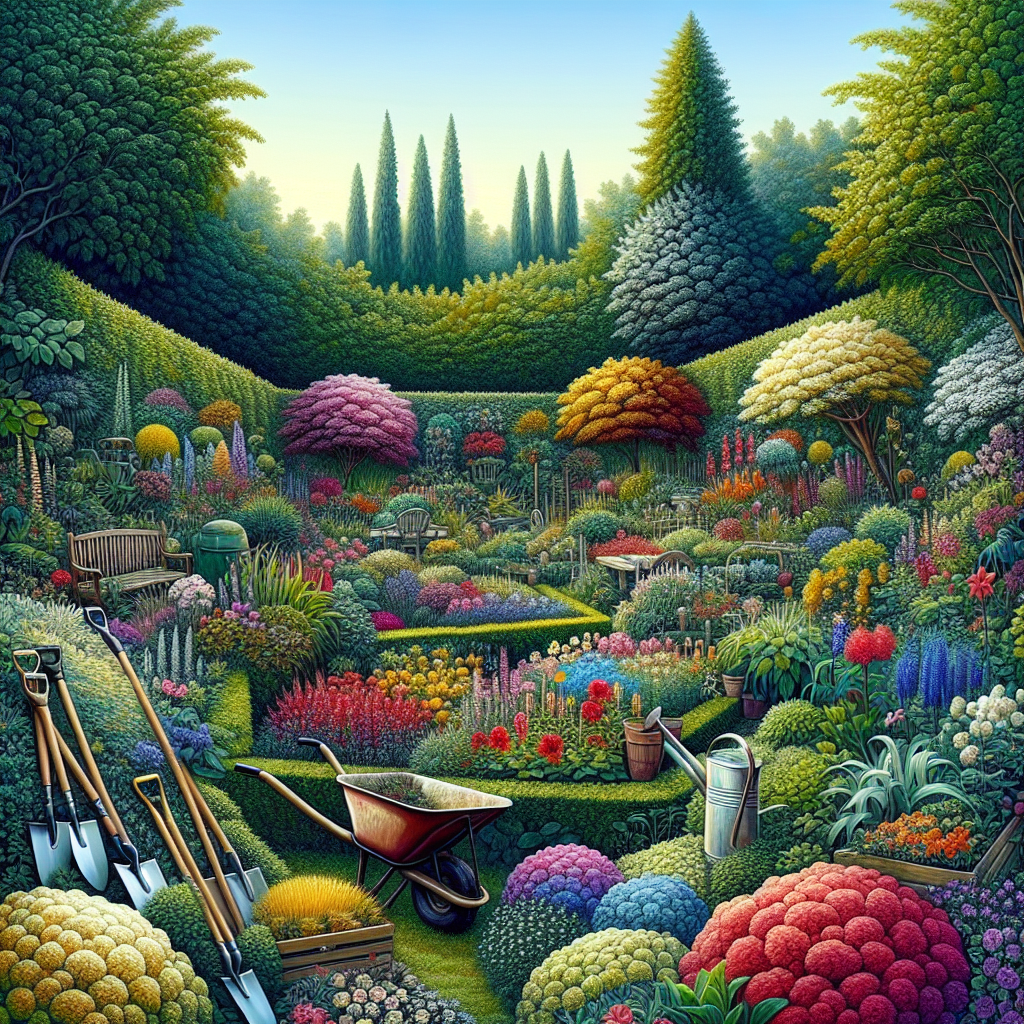
So you’ve decided to take on landscape gardening and transform your outdoor space into a beautiful oasis. But where do you begin? In order to achieve stunning results, you’ll need to arm yourself with the essential tools for landscape gardening. These tools will not only make your job easier but will also ensure that you have the right equipment to tackle any task that comes your way. From basic handheld tools like pruners and shovels to more specialized equipment like weeders and edgers, this article will guide you through the must-have tools that every aspiring landscape gardener should have in their arsenal. With these tools at your disposal, you’ll be well-equipped to create a stunning and well-maintained garden that will leave your neighbors green with envy.
Hand Tools
Shovel
A shovel is a must-have tool for any landscape gardener. It is designed to help you dig and move soil, making it easier to plant and transplant flowers, shrubs, and trees. A good shovel should have a durable blade that can cut through the soil easily and a comfortable handle for better grip. Whether it’s digging a hole for a new plant or removing unwanted soil, a shovel is an essential tool that you will find yourself using time and time again.
Trowel
The trowel is another essential hand tool that every landscape gardener should have. It is smaller than a shovel and is perfect for planting small flowers and plants, as well as digging up stubborn weeds. A trowel has a pointed tip and a flat scoop-like blade, allowing you to dig small holes and move soil with precision. Its compact size makes it easy to carry around in your gardening bag or pocket, making it convenient for quick gardening tasks.
Garden Fork
A garden fork is a tool that may not be as commonly used as a shovel or trowel, but it is still an essential tool for landscape gardening. It is designed with sharp, sturdy tines that are perfect for loosening soil, removing weeds, and turning compost. A garden fork is particularly useful when working with compacted soil, as it helps to break it up and improve its structure. By using a garden fork, you can ensure that your plants have adequate drainage and room for their roots to grow.
Pruning Shears
Pruning shears, also known as secateurs, are essential tools for maintaining the health and appearance of your plants. They are used for cutting back overgrown branches, removing dead or diseased plant parts, and shaping shrubs and hedges. Pruning shears come in different sizes, so make sure to choose the right size for the plants you will be working with. A good pair of pruning shears should have sharp blades that can make clean cuts without damaging the plants. Regular pruning with shears helps to promote healthy growth and keep your garden looking neat and well-maintained.
Power Tools
Lawn Mower
When it comes to maintaining a well-kept lawn, a lawn mower is an essential power tool for landscape gardening. Whether you have a small patch of grass or a large lawn, a lawn mower will make cutting the grass a breeze. There are different types of lawn mowers available, such as manual push mowers and self-propelled mowers, so choose one that suits your needs and the size of your lawn. A properly mowed lawn not only enhances the overall appearance of your garden but also promotes healthy grass growth.
Hedge Trimmer
If you have hedges or shrubs in your garden, a hedge trimmer is a must-have power tool. It allows you to shape and trim your hedges with precision, giving them a neat and tidy appearance. Hedge trimmers come in different types, including electric, cordless, and petrol-powered ones. Choose a hedge trimmer that is suitable for the size of your hedges and make sure to follow safety guidelines when operating it. With a hedge trimmer, you can easily maintain the desired height and shape of your hedges, adding to the beauty of your garden.
Leaf Blower
Fallen leaves can be a hassle to clean up, but with a leaf blower, the task becomes much easier. A leaf blower is a power tool that helps you gather and remove leaves from your lawn, garden, and other outdoor areas. It blows the leaves into a pile, making it convenient for collection or disposal. Leaf blowers come in different types, including handheld and backpack models. They can also double as a tool for cleaning driveways, patios, and other hard surfaces. Investing in a leaf blower will save you time and effort during the leaf-filled seasons.
Chainsaw
A chainsaw may not be a tool that you use every day, but it is an essential power tool for landscape gardening, especially for tasks that involve cutting down trees or large branches. Chainsaws make cutting through tough wood quick and easy. When using a chainsaw, it is important to follow safety precautions and wear protective gear. Working with a chainsaw requires skill and caution, so if you are not familiar with using one, it is best to seek professional help. With a chainsaw, you can efficiently remove unwanted trees or branches, clearing up space for new planting and ensuring the safety of your garden.

Irrigation Tools
Garden Hose
Proper irrigation is crucial for the health and growth of your plants, and a garden hose is an essential tool for this purpose. It allows you to deliver water directly to your plants, ensuring they receive the right amount of moisture. A garden hose should be durable, flexible, and equipped with a spray nozzle for adjustable water flow. Some hoses also come with features like anti-kinking and UV protection. With a garden hose, you can easily water your plants and maintain optimal moisture levels for their well-being.
Sprinklers
For larger areas that need consistent watering, sprinklers are an efficient solution. They distribute water over a wide area, covering a large portion of your garden without the need for manual watering. There are various types of sprinklers available, including oscillating sprinklers, rotary sprinklers, and impact sprinklers. Choose a sprinkler that suits the size and layout of your garden, ensuring that all areas receive adequate water. Sprinklers are a convenient way to automate your watering routine and ensure that your plants stay hydrated.
Drip Irrigation System
Drip irrigation systems are an effective and water-efficient way to deliver water directly to your plants’ root zones. They consist of a network of tubes, emitters, and connectors that can be customized to suit the layout of your garden. Drip irrigation systems allow for precise and targeted watering, minimizing water waste and reducing the risk of overwatering. They are particularly useful for gardens with specific watering requirements, such as vegetable gardens or flower beds. Installing a drip irrigation system can save you time and water while ensuring that your plants receive the necessary moisture for their growth.
Measuring and Leveling Tools
Tape Measure
Accurate measurements are essential when planning and executing landscape gardening projects. A tape measure is a simple yet indispensable tool for taking measurements of various distances, such as the dimensions of your garden, the spacing between plants, or the length of materials you need. Choose a tape measure with a sturdy case and a clear marking for easy reading. With a tape measure, you can ensure precise placement and spacing of plants, structures, and other elements in your garden.
Level
Creating a level surface is important for many landscape gardening tasks, such as laying pavers, building retaining walls, or installing fences. A level is a tool used to determine whether a surface or object is perfectly horizontal or vertical. It consists of a bubble vial and a reference line or plate. A level helps you achieve accurate alignment and prevent uneven surfaces or structures. There are different types of levels available, including spirit levels and laser levels. Choose a level that suits your specific needs and projects.
Laser Level
A laser level is a more advanced version of a traditional level. It uses laser beams to project a perfectly straight line, making it easier to achieve precise alignment and level surfaces. Laser levels are particularly useful for large-scale projects or when working alone. They come in different types, including line lasers, rotary lasers, and cross-line lasers. Some laser levels also come with additional features like plumb points or slope functions. Laser levels can save you time and effort by providing a clear and accurate reference line for various landscape gardening tasks.

Digging Tools
Post Hole Digger
If you need to install fence posts, mailbox posts, or other structures that require deep holes, a post hole digger is an essential tool. It consists of two sharpened blades connected by handles. By gripping the handles and thrusting them into the ground, you can dig holes quickly and efficiently. Post hole diggers come in different sizes, so choose one based on the diameter and depth of the holes you need to dig. With a post hole digger, you can easily create sturdy foundations for your structures.
Auger
An auger is another digging tool that can be used to dig holes in the ground. It is a long, cylindrical tool with a helical blade that rotates to remove soil as you push it into the ground. Augers can be operated manually by hand or attached to a power drill for easier and faster digging. They are particularly useful when you need to dig multiple holes or when working with hard or rocky soil. Augers come in different sizes and blade types to accommodate various digging needs.
Cutting and Pruning Tools
Pruning Saw
For thicker branches or dense shrubs, a pruning saw is a handy tool for landscape gardening. It is designed to cut through thicker wood and can handle branches that are too large for pruning shears. Pruning saws come in different sizes and blade types, so choose one that suits your needs and the size of the branches you will be cutting. With a pruning saw, you can safely and efficiently remove dead wood, shape shrubs, and maintain the overall health of your plants.
Garden Knife
A garden knife is a versatile tool that can be used for a variety of landscape gardening tasks. It has a sharp blade and a sturdy handle, allowing you to cut through plant roots, open bags of soil or mulch, or even remove weeds. Garden knives often come with additional features like serrated edges or bottle openers. Their compact size makes them easy to carry around in your gardening pocket or bag. With a garden knife, you can tackle various cutting and prying tasks in your garden.

Cleaning Tools
Broom
Keeping your garden and outdoor areas clean is an important part of landscape gardening. A broom is a simple and effective tool for sweeping away dirt, leaves, and other debris from your paths, patio, or driveway. Choose a broom with sturdy bristles and a comfortable handle for easy use. Brooms with adjustable heights can also be convenient for different cleaning tasks. With a broom, you can maintain a clean and tidy garden environment.
Rake
A rake is another essential cleaning tool for landscape gardening. It is designed to gather leaves, grass clippings, and other debris into piles, making it easier for disposal or composting. Rakes come in different types, such as leaf rakes and garden rakes. Leaf rakes have flexible, thin tines that are ideal for collecting leaves, while garden rakes have thicker tines for heavier debris. Choose a rake that suits your specific cleaning needs and the type of debris you will be dealing with. With a rake, you can efficiently clean up your garden and maintain its overall cleanliness.
Safety Equipment
Gloves
Safety should always be a priority when engaging in landscape gardening activities. Wearing gloves is essential for protecting your hands from sharp objects, thorns, or chemicals. Choose gloves that fit well and offer good dexterity, allowing you to handle tools and plants with ease. There are different types of gloves available, such as leather gloves for better durability or rubber gloves for chemical protection. Investing in a pair of quality gloves will ensure that your hands stay safe and comfortable while you work in your garden.
Safety Glasses
Safety glasses are an important protective gear for your eyes when working with tools, handling plants, or dealing with any potential flying debris. They provide a barrier from dust, wood chips, or other particles that could cause eye injuries. Look for safety glasses that are impact-resistant, have a comfortable fit, and provide proper coverage for your eyes. Wearing safety glasses will prevent eye accidents and allow you to work with confidence and peace of mind.
Dust Mask
When working in dusty areas or handling materials like soil, mulch, or chemicals, wearing a dust mask is crucial for protecting your respiratory system. Dust masks filter out airborne particles, preventing you from inhaling potentially harmful substances. Look for dust masks that provide a good seal and have a high filtration efficiency. Disposable masks are convenient for one-time use, while reusable masks can save you money in the long run. By wearing a dust mask, you can ensure that you breathe in clean air and minimize the risk of respiratory issues.
Wheelbarrow and Garden Cart
Wheelbarrow
A wheelbarrow is a versatile tool that helps you transport heavy materials, such as soil, compost, or plants, around your garden. It typically consists of a tray or hopper, two handles, and a wheel. Wheelbarrows come in different sizes and capacities, so choose one based on the amount of material you will need to move and the terrain of your garden. Look for a wheelbarrow with sturdy construction and durable wheel(s) for better maneuverability. With a wheelbarrow, you can save time and effort by easily transporting materials to different areas of your garden.
Garden Cart
A garden cart is another useful tool for transporting heavy materials in your garden. It usually has a larger capacity than a wheelbarrow and is designed with four wheels for increased stability. Garden carts often come with a handle or hitch, allowing you to tow them behind a lawn tractor or other utility vehicles. Some garden carts also have dumping features, making it easier to unload the materials. Choose a garden cart that suits your specific needs and the size of your garden. With a garden cart, you can efficiently move heavy loads without straining your back or arms.
Soil Testing Tools
pH Test Kit
Understanding the pH level of your soil is important for the health and growth of your plants. A pH test kit allows you to measure the acidity or alkalinity of your soil, helping you determine whether it is suitable for certain plant species. pH test kits typically come with test strips or a liquid solution that changes color based on the pH level. Follow the instructions provided with the kit to obtain accurate results. By regularly testing the pH of your soil, you can make proper adjustments and create an optimal environment for your plants.
Moisture Meter
Proper watering is crucial for the health of your plants, and a moisture meter can help you determine when it’s time to water. It measures the moisture content of your soil, indicating whether it is too dry or too wet. Moisture meters often have a probe that you insert into the soil, and they provide a reading based on the moisture level. Some moisture meters also include additional features like temperature or light measurement. With a moisture meter, you can ensure that your plants receive the right amount of water for their needs, preventing overwatering or underwatering.
In conclusion, landscape gardening requires a variety of tools to ensure successful and efficient gardening projects. From hand tools like shovels and trowels for digging and planting, to power tools like lawn mowers and hedge trimmers for maintenance, each tool plays a vital role in creating and maintaining a beautiful outdoor space. Irrigation tools like garden hoses and sprinklers help keep your plants hydrated, while measuring and leveling tools like tape measures and laser levels ensure accuracy in your projects. Digging tools like post hole diggers and augers assist in creating foundations and holes, while cutting and pruning tools like pruning saws and garden knives help you shape and maintain your plants. Cleaning tools like brooms and rakes keep your garden tidy, while safety equipment like gloves, safety glasses, and dust masks protect you during your gardening tasks. Wheelbarrows and garden carts make it easier to transport materials, and soil testing tools like pH test kits and moisture meters help you maintain optimal soil conditions for your plants. By equipping yourself with these essential tools, you can enjoy the process of landscape gardening and create a stunning outdoor oasis.